
Bus Factor Risk: A CTO’s Guide to Shared Ownership

When one engineer holds critical system knowledge, another name on an ownership chart is not enough. Use this decision framework to test coverage, fund knowledge transfer, and decide whether permanent hiring is justified.
7 Signs Your Engineering Team Needs More Capacity

A growing backlog does not automatically mean your engineering team needs more developers. This guide explains seven signs of a real capacity problem and how technology leaders can separate staffing constraints from workflow, tooling, ownership, and prioritization issues.
How to Pilot a Nearshore Staff Augmentation Partner Before You Scale

A nearshore partner may promise vetted talent, fast onboarding, and strong cultural fit, but those claims are difficult to evaluate before real work begins. This 30-day pilot framework helps engineering leaders test technical fit, integration, communication, provider support, and scalability before expanding the engagement.
Software Migration Outsourcing: Direct Hire, Staff Augmentation, or Project Outsourcing?
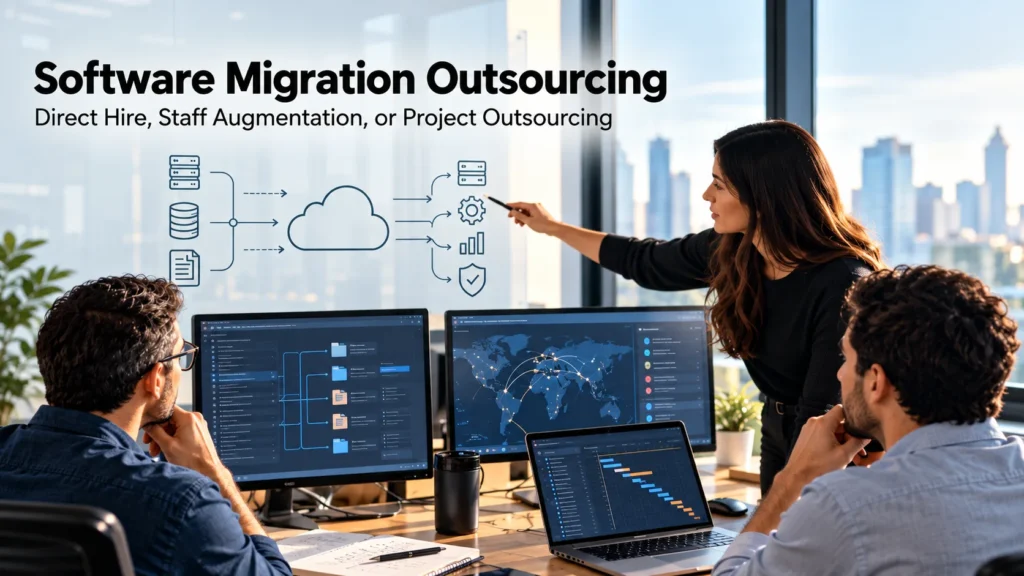
A successful software migration requires more than technical expertise. This framework helps technology leaders choose between direct hiring, staff augmentation, and project outsourcing based on migration scope, internal management capacity, long-term ownership, cutover risk, and handoff requirements.
Software Project Outsourcing vs Staff Augmentation for Security-Critical Work
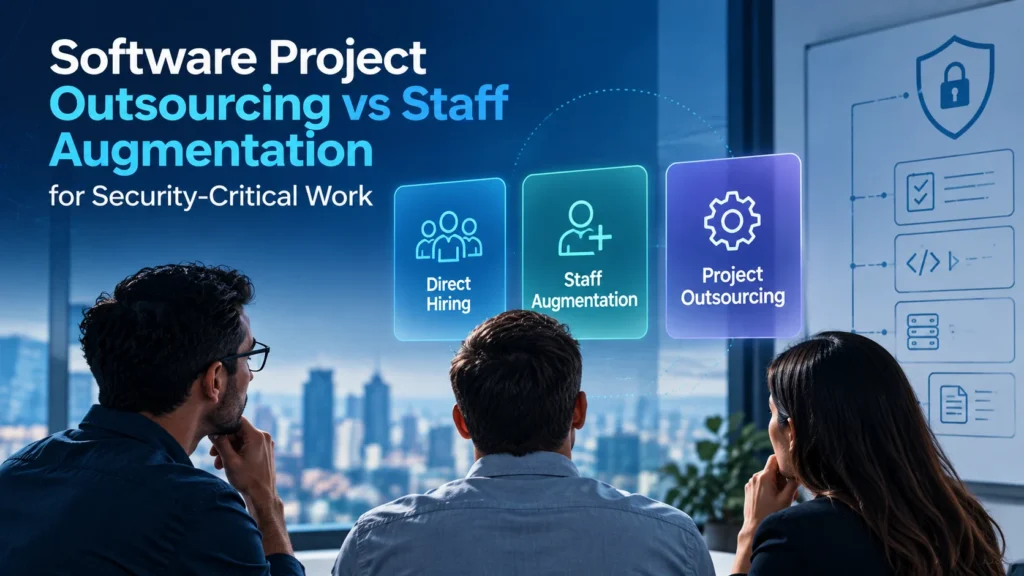
Choosing the right software delivery model requires more than comparing cost and speed. This guide helps technology leaders evaluate direct hiring, staff augmentation, and project outsourcing based on ownership, management capacity, security requirements, acceptance criteria, and long-term handoff.
The First 10 Working Days: A Nearshore Developer Onboarding Playbook

A practical 10-day nearshore developer onboarding playbook for engineering teams. Learn how to prepare access, build technical context, complete the first pull request, measure readiness, and gradually move new engineers toward independent ownership.
How to Build an AI Engineering Team Without Increasing Costs
Building an AI engineering team doesn’t have to mean dramatically increasing your engineering budget. This guide explores practical strategies for creating high-performing AI teams through lean team structures, flexible hiring models, distributed engineering teams, and nearshore talent. Learn how successful companies balance innovation with cost optimization, avoid common hiring mistakes, and scale AI capabilities efficiently without compromising quality or long-term business growth.
AI Developer Augmentation: 7 Smart Strategies to Scale AI Teams
Discover how AI developer augmentation helps companies quickly access specialized AI talent without the delays of traditional hiring. Learn when to use staff augmentation, how to scale AI engineering teams, and why nearshore AI developers are becoming the preferred choice for U.S. businesses.
Complete Guide to Hiring LATAM Software Engineers in 2026
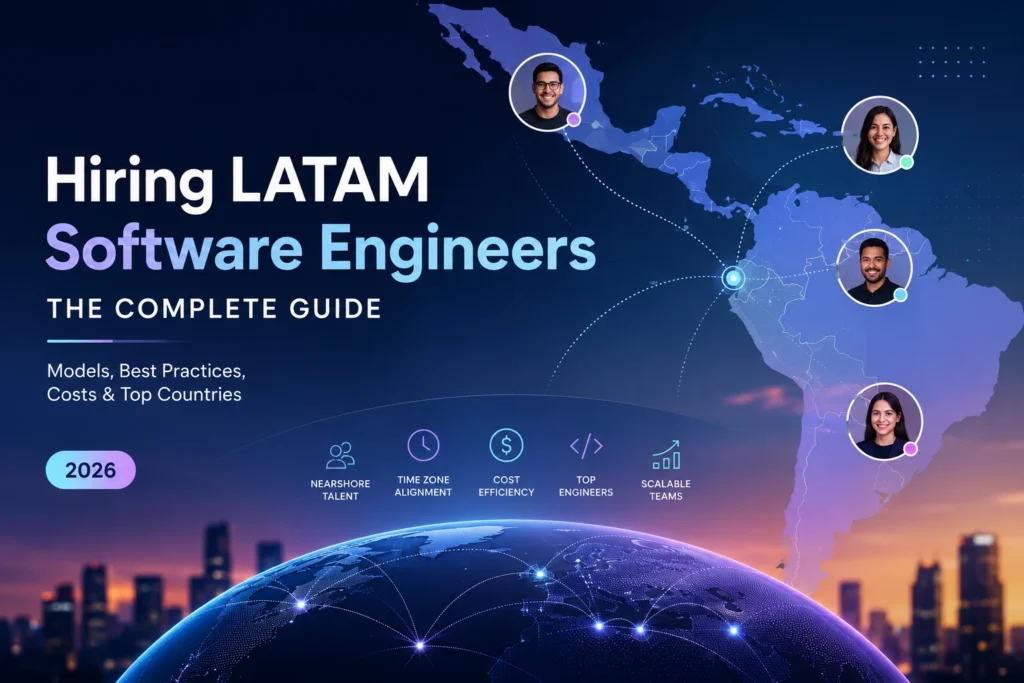
Hiring software engineers in Latin America has become a strategic advantage for companies looking to scale faster without sacrificing quality. This comprehensive guide explains how to hire top LATAM developers, compare hiring models, evaluate technical and communication skills, choose the best countries for recruitment, and build high-performing nearshore engineering teams in 2026.
Engineering Staff Augmentation vs Direct Hiring: Pros, Cons, and Costs
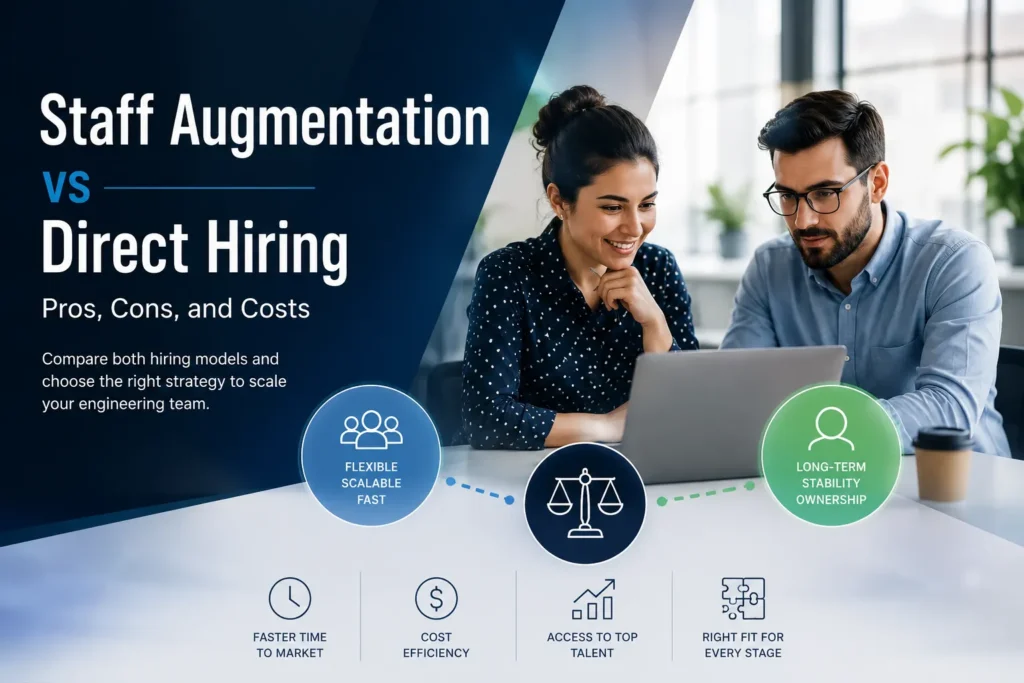
Engineering staff augmentation and direct hiring each offer unique advantages, but choosing the right model depends on your company’s hiring timeline, budget, and long-term goals. This guide compares both approaches across cost, flexibility, scalability, and speed, helping engineering leaders determine when to hire permanent employees, when to leverage nearshore engineering talent, and when a hybrid workforce strategy delivers the greatest business value.